

The Development and Use of Mercedes 417 CDI Ambulances
1. Introduction to Mercedes 417 CDI Ambulances
Mercedes 417 CDI Ambulances; The ambulance service plays a major role in emergency medical services. A great deal is expected from them. They are the basis of a 24-hour ambulatory health and emergency medical services system due to their design and procurement requirements being different from other public use vehicles. There have been various attempts in the development of ambulances from their design point of view. At some points in vehicle technology, specially designed vehicles were obtained, referred to as ambulances. Thus, the ambulance design has transformed from carriage to a similar goods carrier vehicle type.
In a sector report, it is stated that around 200-300 new ambulances were put into service every year in Turkey and there are around 27-30 ambulances under 3 years old in Turkey, where the number of new ambulance demand reaches 500 annually. It is possible to meet all kinds of ambulance needs in the country’s road transfer requirements. The purpose of this study is to introduce the design and development services of Turkey’s MB-MCV in the field of ambulance production through Mercedes 417 CDI ambulances, which are neither a mass production standard vehicle model nor a customized model for a country. In developing the design of this vehicle type, in addition to ease of maintenance, reliability, durability, safety, and efficiency have been taken into consideration. The Mercedes 417 CDI ambulance type was developed and later redefined by ensuring the continuity of existing products rather than having a brand-new design approach in the periodic design and development work in Turkey.
2. Historical Background of Ambulance Development
Mercedes 417 CDI Ambulances, ambulances were initially little more than transport for the sick and injured, generally as a mode of last resort. In their native France, they were described as a combination of cat stretcher, wheelbarrow, and garden rolling chair in varying combinations. This, however, did not detract from the general utility of the early combinations, and if during the Peninsular War care was taken to have at least one litter in each British battalion, then most of the time it had been used up by the time the medical services got to the long lines of their own wounded. There are numerous descriptions of these, but few rival the efforts in the Crimean War. The drivers were often referred to in less than flattering terms. This would not be so bad if the ambulance drivers stood aside with the engine of the vehicle, then backward to tilt the load. By and by, science and a newer ethical approach would handle such situations, but these are not early concerns in transport in a critical case.
Legislation promoting public safety, healthier social conditions, and later sophisticated medical treatment constantly challenged and stimulated the manufacturers of such vehicles to advance and even at times to revolutionize their thinking. The history of one of these manufacturers remained punctuated by these successive leaps in medical treatment, health and safety law, social structures, and above all the practices of rescue services. The company evolved from its insignia inspired by earlier automotive innovations into three stock corporations registered before the turn of the century. This started as the engine and was financially supported by various stakeholders, envisaging an improved type of engine for other applications, including the tram engine discussed so far in the section dealing with the development of ambulance transport. The first rescue vehicles were built using these engines in the year 1895. Among the many features of the vehicles, we would notice that a considerable practicality of design indicates the evolving ambulances were being designed in concert with emerging patterns of medical practice. For example, we find a collar at the front part of the box, enabling patients to sit up in the latest designed vehicles that have not yet been converted to the floor patient stretcher configuration to accommodate the modern approach.
3. Key Features and Specifications of the Mercedes 417 CDI Ambulance
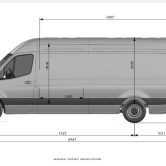
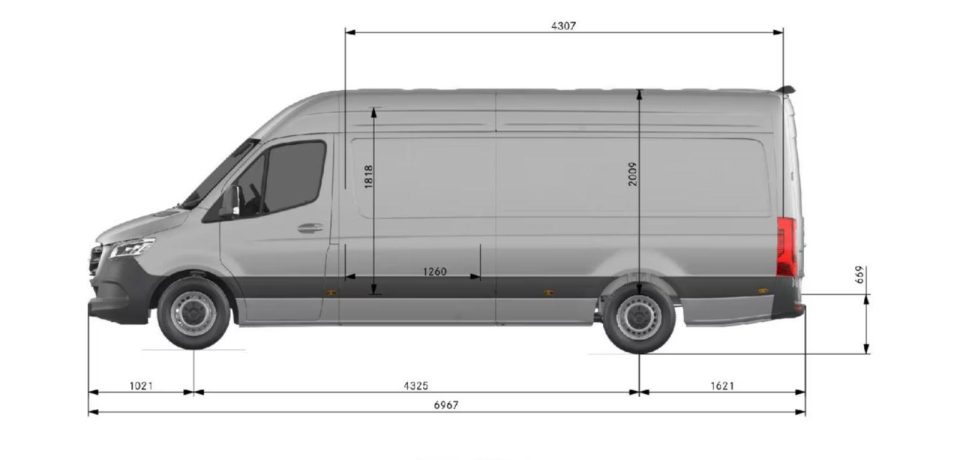
Mercedes 417 CDI Ambulances; The Mercedes 417 CDI ambulance is 6940 mm long, including the integrated rear step bumper, or 6680 mm long without. The body itself is 2085 mm wide and 2270 mm wide at the fenders. Inside, it has a volume of up to 13 cubic meters. The curb weight of the vehicle is not more than 4570 kg, and it can carry a chassis weight of up to 5600 kg. The vehicle is powered by a 7G-Tronic automatic transmission and an OM 922 LA 4-cylinder turbo diesel engine with an output of 190 HP or 163 HP. The design of the ambulance includes an electrical medical installation with double insulation and advanced shock absorption to function reliably on uneven terrain, enriching patient transport comfort for both the patient and the medical team. The floor has an additional layer of 12 mm thick aluminum to protect the interior from road impacts and humidity, thereby prolonging the useful service life of the vehicle.
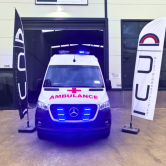
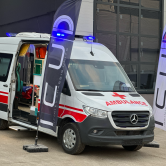
The safety features of the 417 CDI include an advanced Electronic Stability Program, Hill Assist for starting and stopping in motion, anti-lock braking system, acceleration skid control, and brake force distribution, plus sophisticated hydraulic Brake Assist with Anti-Slip Regulation Traction Control, automatically applying maximum braking force in emergencies. The 417 CDI’s urgency lights are in-built with European homologation. Sideral is indicated at the rooftop of the vehicle to have maximum visibility, with an additional LED handset on the front windshield for maximum directional visibility from a distance. The customization of the interior, medical equipment, and internal and external color mapping of the 417 CDI are all on a consultation basis with the client, taking into account the local regulations and operational needs. The 417 CDI ambulance is designed to logically and safely transport patients, critically injured patients, and their victims from unwanted incidents calmly and comfortably. This concept of design and manufacture is applied to all models in the product range.
The Mercedes 417 CDI ambulance offers a low total cost of ownership as it is more fuel-efficient than competitor vehicles, with longer maintenance intervals. As an alternative to SUV-based transport, the 417 CDI competes well as the ambulance vehicle of choice in many countries. The Mercedes 417 CDI ambulance manufactured is capable of transporting critically injured, severe, and semi-unconscious patients from accidents and incidents to medical facilities in various terrains, including the challenging terrains of mountainous, forested, and sandy beaches. With a maximum output of 190 HP or 163 HP, it will not lose power at altitudes expected during 417 CDI ambulance operations. The 417 CDI has a displacement of 4.8 liters, is capable of generating 750 Nm of torque, uses AdBlue technology for clean emissions, and complies with the latest directive.
4. Medical Equipment and Technology Integration
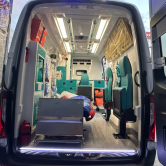
The Mercedes 417 CDI ambulance is designed to carry sick, injured, and wounded individuals, and aims to be a 24/7 vehicle. Integration of medical and technological requirements in these vehicles is defined by the properties of their primary function, making them modern ambulances. The Mercedes 417 CDI ambulance includes a standard oxygen cylinder, suction device, inverter, oxygen tube, power cables, and even an IV hanger in the patient cabin. For patient safety and comfort, a defibrillator, ventilator, UV-IR air sterilization device, stretcher, piped-in oxygen system, and negative pressure vacuum stretcher are standard equipment.
The strong use of technology and cutting-edge devices is essential for effective intervention and patient recovery. Today, telemedicine applications have been integrated into the ambulances, providing interactive discussions between the emergency operator in the hospital and the paramedic in the ambulance, while facilitating the next line of intervention through ultrasound, a means for rapid data acquisition, and real-time ECG, which transmits the data via the patient’s mobile phone with the help of an adhesive placed on the rear. This modern technology is mounted on a cassette tray at each end, along with a defibrillator and a water cartridge carrying a blower and vacuum pump. It is constructed separately between the operator’s compartment and the ambulance. In this way, the operator is protected from operational noise, vibration, and tray effects. The door and service latch are made of aluminum. Walk-on and examination benches are designed to be water-resistant. To reduce the workload of health staff and protect against the spread of infection, which has become increasingly important during pandemics, the entire device is made with a flat, ergonomic design that can be easily disinfected.
5. Case Studies and Real-World Applications
In this section, some case studies and examples for the operational use of the Mercedes 417 CDI “spacious ambulance” are presented. The chapter aims to connect with previously described theoretical contexts of the case study. The purpose is to visualize the application scenario and the special features of urban and rural use of the vehicle. Also, different purposes—especially used for emergency services, public healthcare, sports medicine, as well as administrative and educational work during special medical workshops—are briefly described. Five examples are listed in this chapter, showing the real-world impact and application of the Utilimaster 417 CDI “spacious ambulance” in various locations and emergency care scenarios. Even in a primary healthcare closed-root system, the vehicle can be operated in both the city center and sparsely populated outer urban settings. Therefore, successful operational examples shall show the impact, characteristics, and strong growth of 977 vehicles in active use for overt transportation of patients over more than two-month intervals.
There are few ways to present data on an evaluation of large emergency vehicles in operations and how they impact patient care. This case study is one of many examples of a real-life problem or the situation needed to address a specific population in rural areas. The vehicle needs to be presented as the most complex ambulance evaluated with the longest time periods of active use. An evaluation of options and impact based on a snow avalanche or a building collapse uses data learned in these case studies. Similarly, a building fire evacuation or influenza patient transport options in a communal group were also evaluated and developed further. Feedback was gathered from both healthcare providers related to the representatives of bus drivers, security guards, and assistant medical officer drivers as well as front-line government officials understanding the operational constraints, benefits, and potential improvements. The workshops used four locally developed care-outcome hierarchy scales: quality of technical care, patient perception of care, patient satisfaction with the care system, and overall healthcare system effectiveness.